

How Long Will Your Inverter Battery Last During Load Shedding Leave a comment
Just switch on the lights, and your inverter activates automatically! However, how long will you be able to count on it before the battery runs out? If you’ve ever been in the dark longer than you expected during a power lapse, you know that this is a far more important question than any spec sheet can answer.
Inverter battery life during load shedding depends on the rated capacity of the inverter battery, but also on many other factors. This depends on how the battery was charged, getting hot in your battery room, appliances being used, and the real age of the battery. It helps to have this knowledge, as opposed to a number on a box, to get a realistic picture of these.
What Does Backup Time Really Mean?
If a battery is presented with a specific rating, it will tell you how much energy the battery can contain, but not how long it will last in your house. The actual backup time of a battery is solely dependent upon the load. Light a few lights and have a fan running, and it could keep you going for hours with the same battery. The same battery can be guzzled in a few moments with the addition of a refrigerator, air conditioner, or water pump.
Hence, two people can have the same battery and experience vastly different results. The performance of your inverter battery during load shedding is a ratio of capacity vs demand and is not a guaranteed performance.
Deep Discharge is Slowly Reducing Your Backup Time
Every time your battery runs down close to its end, it experiences slightly more stress than if it was partially discharged. If you live in an area prone to power cuts and your battery usually goes down to 40 or 50 percent, then your battery is put under more stress each day than what it is designed for. Over a period of months, continuous deep discharges are one of the main causes of rapid loss of your battery’s backup capabilities.
That is particularly relevant to Pakistan, where the load shedding can go for many hours at a time as opposed to random short power cuts. A battery capable of working during 90 minutes of darkness may have trouble during cuts lasting four to six hours.
Heat is Working to Make Your Battery Fail in the Summers
It’s not just the case that your battery room becomes an uncomfortable place during the summer; it is also the fact that “heat works to shorten the lifespan of the battery during load shedding”. The higher ambient temperatures affect your battery internally by increasing its deterioration rate, regardless of whether it is a lead-acid battery or a lithium-ion battery.
Putting your battery in a shady and ventilated area instead of keeping it inside a cabinet or an enclosed space on the rooftop actually makes a lot of difference in this situation.
Why Lithium Batteries Handle Load Shedding Differently
Lithium iron phosphate batteries, commonly known as LiFePO4, behave differently from traditional lead-acid batteries under repeated cycling. They’re built to handle deeper, more frequent discharge without the same rate of internal wear, which is exactly the kind of stress that daily load shedding puts on a battery. This is part of why LiFePO4 has become a common choice for households dealing with regular outages rather than occasional ones.
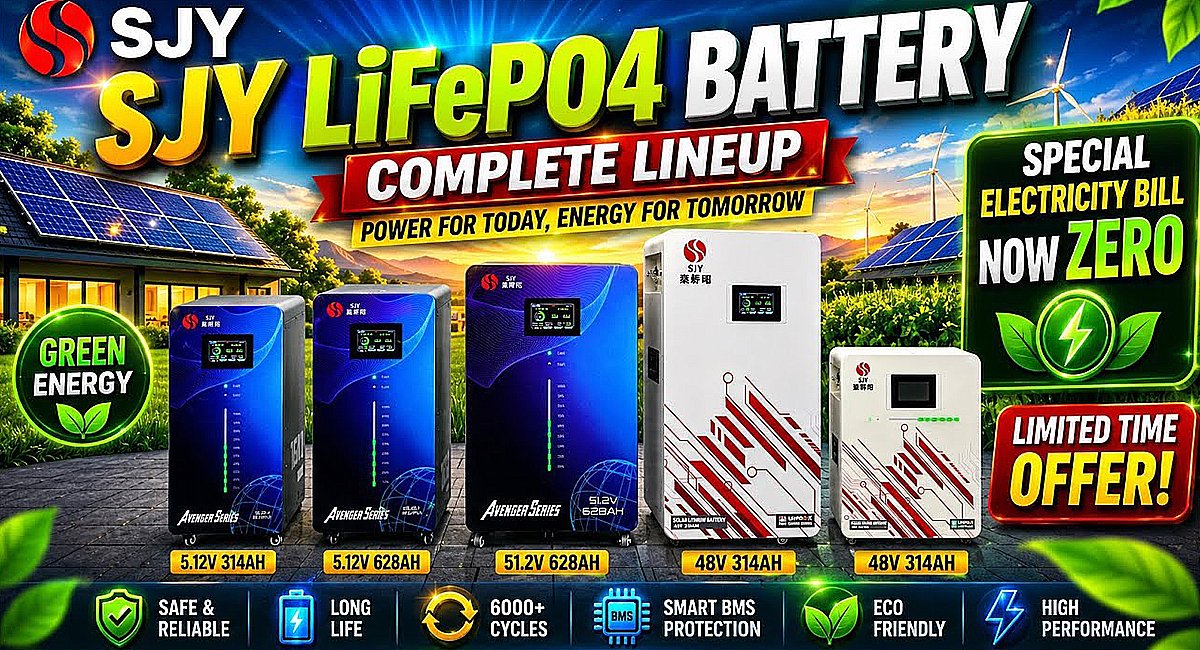
Maaz Electronics lists LiFePO4 batteries across several voltage and capacity options built for solar inverter and UPS use, and the product listings show the specific voltage, capacity, and cycle information for each model rather than a single blanket number.
Watching A Real Load Test Tells You More Than A Spec Sheet
Numbers on a product page only go so far. Seeing an actual 48V LiFePO4 battery under real backup load gives you a much clearer sense of what to expect during an actual outage. This video shows a 48V SJY 314A LiFePO4 battery being tested specifically in a load-shedding context, and it’s worth watching before you decide on a capacity for your own home:

Voltage Swings Are Doing Damage You Might Not Notice
The grid in Pakistan does not always provide a smooth and stable voltage supply, and such inconsistency is not going to end with your inverter. The overcharge in voltage leads to increased gas production by the battery, resulting in an increased corrosion rate of its terminals. Corroded terminals result in poor connections, thus providing the battery with poor performance, regardless of the state of its cells.
If you have seen a reduction in the battery backup duration and have not made any changes in your usage habits, you should examine the terminals and charging voltage before considering the problem to be caused by the battery itself.
A Few Habits That Actually Extend Your Backup Time
You don’t need to overhaul your entire system to get more consistent backup during load shedding. A handful of habits make a real difference over time.
- Avoid running your battery down to near zero on a regular basis
- Keep the battery in a cool, ventilated spot away from direct heat
- Match your charging settings to your actual battery type
- Check your terminals periodically for corrosion or looseness
- Size your battery to your real load, not just your biggest one
None of these require replacing equipment. They’re just about giving your existing setup a fair chance to perform the way it’s supposed to.
Size of Your Battery For The Outages You Actually Get
Before buying a new battery or upgrading an old one, it helps to think honestly about how long your outages typically run and what you actually need powered during them. A household running only lights and fans needs a very different setup than one trying to keep a fridge and a router alive for six hours straight. Overestimating your needs means paying for capacity you rarely use, while underestimating leaves you back in the dark before load shedding even ends.
If you’re not sure what capacity fits your actual household load, it’s worth talking through your specific setup rather than guessing from a general chart. Maaz Electronics has worked directly in Pakistan’s electronics and power-systems market for over 9 years, dealing with exactly this kind of practical battery sizing for homes facing real load shedding conditions rather than lab-ideal ones.
Getting a clear answer on how long your inverter battery will last during load shedding comes down to understanding your load, your climate, and your battery’s actual condition, not just the number printed on the label. Once you match those pieces together, your backup time stops being a guessing game. For business inquiries, reach out at 𝐦𝐚𝐚𝐳𝐞𝐥𝐞𝐜𝐭𝐫𝐨𝐧𝐢𝐤𝐬@𝐠𝐦𝐚𝐢𝐥.𝐜𝐨𝐦
