

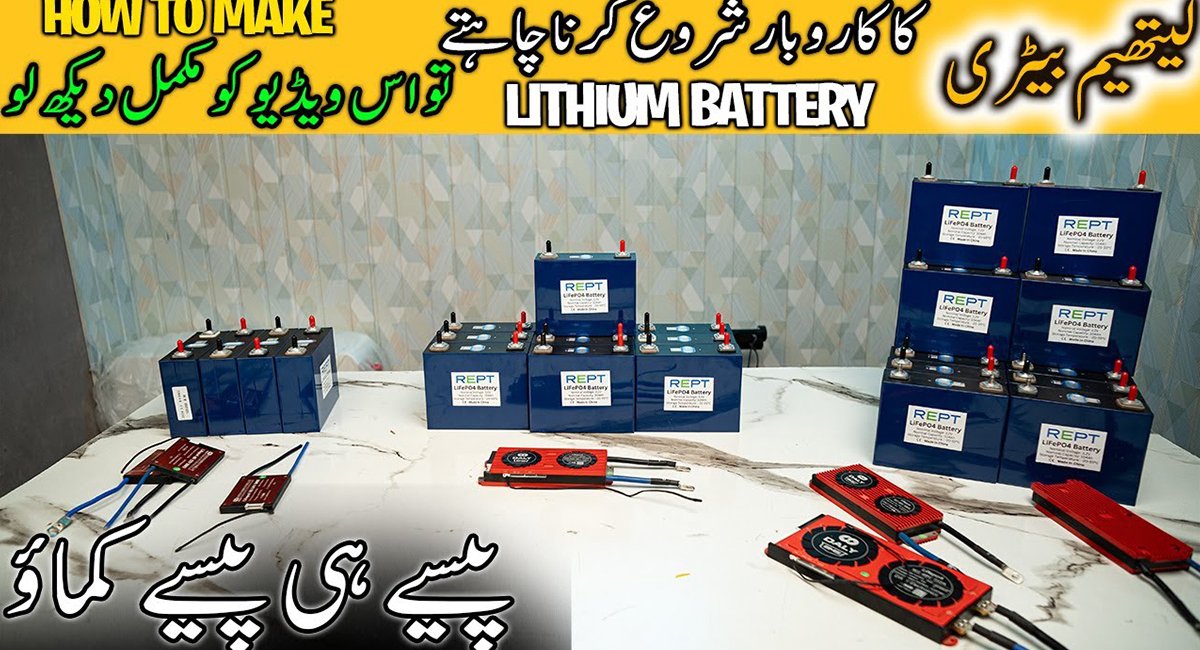
How to Make a Lithium Battery at Home Safely and Properly Leave a comment
Creating your own Lithium Battery pack might seem daunting initially, but after getting some knowledge about its construction, the process becomes much more straightforward. In case you need a battery for a solar backup system, e-bike, or a small UPS pack, knowing how to assemble it properly will not only allow you to save some cash, but also give you the ability to customize your own pack.
In this guide, we will help you understand the whole procedure clearly.
What You Are Actually Making
When it comes to building your own Lithium Battery at home, what people usually mean is creating your own battery pack by connecting lithium cells together, not producing these cells from scratch. The cells are already produced in advance, for instance, 3.2V LiFePO4 cells, and then, depending on the desired voltage, are connected in series and/or parallel configurations to achieve the needed parameters. For example, a 12V Lithium Battery is usually created by putting four 3.2V LiFePO4 cells in series.
This is important because you are not inventing your own lithium Battery from scratch; you are putting together commercially available and tested cells to make a battery pack, a much more realistic task when done at home.
Selecting The Right Type of Cells for Your Project
Lithium Iron Phosphate LiFePO4 cells are the safer type of cells when compared with conventional lithium-ion cells, and this is the reason they have been adopted for use in solar battery systems, e-bikes, and UPS batteries all around Pakistan. They offer better heat resistance due to hot summers.
Before purchasing cells, ensure that you know how many volts and ampere-hours you want. If constructing a Lithium Battery to power a small inverter setup, you will be required to calculate the total watts and go back to find the number of ampere-hours required. Cells whose capacities and internal resistance match should work well together and should be purchased from the same batch.
Why a Battery Management System is not optional
Battery Management System (BMS) is the device within your Lithium Battery pack that maintains control of everything. It monitors the voltage of every single cell, prevents overcharging, prevents over-discharging, and breaks the circuit in case of any malfunction, such as a short circuit or excessive current flow.
Avoiding the BMS is one of the most frequent errors made by individuals when constructing their own Lithium Battery at Home. The absence of it may result in the imbalance of cells in your battery pack, which would be a huge factor that will affect its efficiency and, most importantly, cause serious danger to you. Make sure to select a BMS that is compatible with the number of cells and current in your battery pack.
Connecting the Cells Without Damaging Them
Cell connection requires certain precautions. Most constructors employ nickel strips along with a spot welding machine to connect the cells, because spot welding does not involve the same amount of heat as direct soldering, which is likely to burn out the cell and spoil it.
In case you do not have a spot welder at hand, there are pre-built battery holders available in the market that come equipped with connectors. Whatever technique you opt to use, be sure to verify the polarity before soldering. It is worth noting that a reversal of polarity in a Lithium Battery pack causes instant damage to cells or the BMS.
For anyone who wants to see this process in action before attempting it themselves, this video walks through the full assembly step by step:
Watching a real build helps you understand how the pieces fit together in a way that’s harder to picture from text alone.
Charging Your New Battery For The First Time
After your Lithium Battery pack is constructed, its first charge becomes crucial. Charge using a charger that will work with the type of cell technology and arrangement used, and not a universal charger that will not match your battery pack’s voltage and series numbers. Slowly charge the first time and watch how hot it gets and what voltage your pack reaches during charging instead of just ignoring it.
If the Lithium Battery pack was constructed correctly, then it will charge evenly with all cells, assuming the BMS works well. If you see that one cell heats up quicker than the others or your voltages are uneven, then cease charging and double-check your connections.
Battery Storage and Safety after Assembly
Storage and proper handling of the assembled Lithium Battery is equally essential as the process of assembly. Never leave the battery exposed to heat or direct sunlight, particularly in the summer season in Pakistan, where there will be an increase in temperature in rooftop and room storage of batteries. Ventilation is very important because lack of ventilation will cause heat retention and reduce the battery’s life.
Be aware of any swelling, unusual heat production while operating normally, or any chemical odor emanating from the pack. This is an indication of something going wrong inside the pack and should not be disregarded. Should you observe these indications, cease use of the battery and seek advice from someone knowledgeable about Lithium Battery technology.
Getting the Right Help at the Right Time
Constructing your very own Lithium Battery can be an engaging task; however, there is nothing to feel embarrassed about if you are facing trouble selecting cells, BMS, and wiring it up in your particular arrangement. In case you need any suggestions for choosing the right type of cells and BMS for your project, you can drop a mail at maazelectroniks@gmail.com.
Constructing Something That Actually Lasts
Properly built lithium battery packs can give you many years of service, provided you put some effort into constructing the pack. Make sure you select good quality cells, have a BMS system installed in your lithium battery, make correct connections, and be aware of how your pack works once installed. The above is much more important than anything else, and the difference between a long-lasting and a failed pack. Take your time with each step and do not rush through the process of wiring and charging. Your effort and patience when making the Lithium Battery will pay off in the form of reliable energy for any task that you want to accomplish.
