

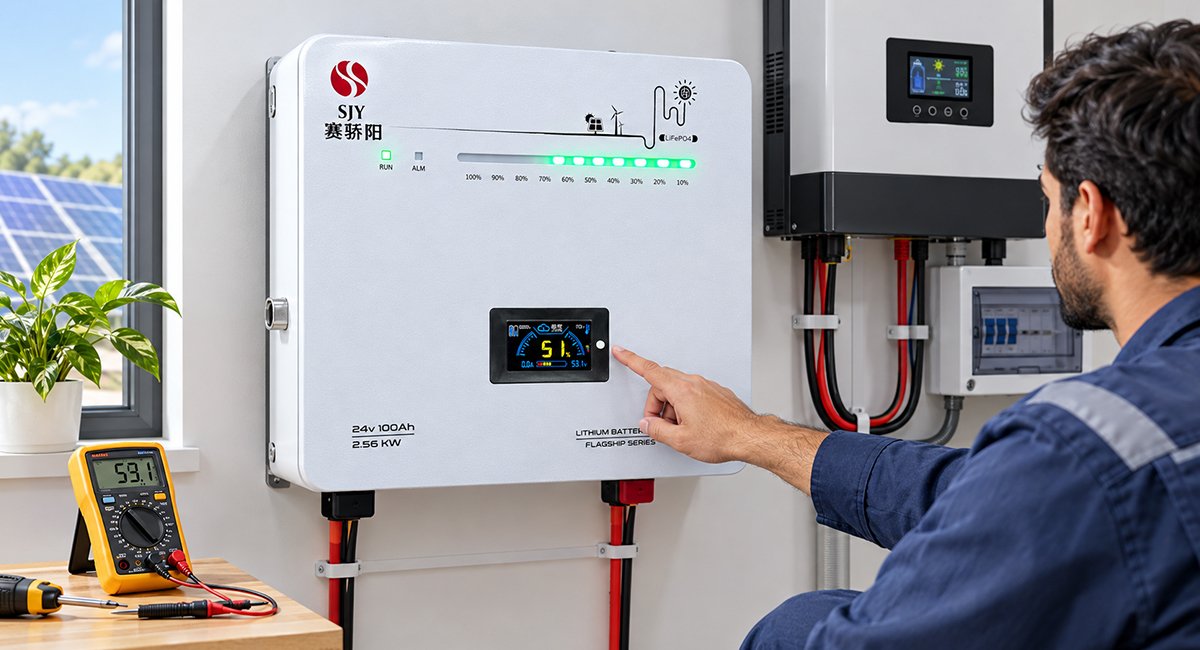
Lithium Battery Not Charging Or Draining Too Fast: Here Is What To Do Leave a comment
When you connect your lithium battery to charge overnight and wake up to find out it has not charged or has lost its charge within a few hours of unplugging it, then it is one of the problems that lithium battery owners face. The great thing about this problem is that there is usually an explanation behind it.
The issue of Lithium Battery Not Charging does not mean the battery itself is faulty or needs to be replaced. There is always something specific about the process of charging that causes this problem.
Before Blaming The Battery, Test The Charger
The first and foremost thing that needs to be checked in such cases is the charger, not the battery. In case your lithium battery is not charging, then you may need to switch over to a different charger for your lithium battery with the same voltage rating and observe the results. A defective charger, one with the wrong voltage rating or a charger that is incompatible with your lithium battery in terms of series connection, will always give similar results as a faulty lithium battery.
This is very important, particularly in Pakistan, since fluctuations in the voltage levels from the power grid may impact the efficiency of the charger over time. A charger that has been working perfectly well for several months will begin to generate uneven output due to wear and tear of its components, resulting in Lithium Battery Not Charging.
Why The BMS Might Be Blocking The Charge On Purpose
Every properly built lithium battery pack has a Battery Management System sitting between the cells and the outside world. If your lithium battery is not charging, the BMS may have cut the connection deliberately, not because it malfunctioned, but because it detected a condition outside safe limits. Overcharge protection, over-current protection, and temperature protection are all built to stop charging the moment something looks wrong.
This is actually the BMS doing its job. If one cell in the pack drifts too low from age or prolonged storage, some BMS units will refuse to start charging until that cell is brought back into range through a slower recovery process. This is different from a battery that has genuinely failed.
What A Sudden Drain Usually Points To
A battery that drains far faster than expected right after a full charge tells a different story than one that won’t charge at all. Rapid drain after charging is often connected to cell imbalance, where one or more cells inside the pack are weaker than the rest and pull the whole pack down faster during use. It can also point to a load drawing more current than expected, or a battery that’s simply reached the end of its useful cycle life.
Before assuming the worst, check what’s actually connected to the battery. An appliance or inverter drawing more current than intended will drain any battery quickly, lithium or otherwise, and this is worth ruling out before deciding the battery itself is the problem.
Watching A Real Charging Test Makes The Difference Clear
Reading about charger and BMS behavior only takes you so far, seeing it in action helps you tell a charger problem from a genuine battery problem much faster. This video walks through a 12V to 24V charger with reverse protection, showing how it handles a battery that appears dead and won’t respond to charging, which is a common scenario people run into:
The Heat Is Actually Ruining Your Battery More Than You Realize
The high temperature during the summer season in Pakistan creates environmental conditions way beyond what the manufacturer assumes for his product. A Lithium Battery Not Charging warning when there is a high temperature, or a lithium battery that discharges quickly due to the high temperature, may be due to the protection circuitry inside the battery working due to the high temperature. Lithium batteries work in certain temperature ranges, and going beyond that temperature range during charging causes the BMS to slow or stop charging altogether.
However, if the battery is located in an area that does not have proper ventilation or in a closed cabinet or even on a roof due to heat, then the location itself would be the reason for both charging issues as well as battery drainage at an earlier-than-expected rate.
How Load Shedding and Frequent Cycling Affect Battery Life
If you are living in an area where there are constant instances of load shedding, then your battery is constantly going through the cycle of charge and discharge at a much higher rate than batteries that have stable grid conditions. The increased rate of cycling will speed up the wear process that occurs naturally on any lithium battery during its lifespan.
This isn’t a flaw but just an inevitability that happens when your batteries grow old due to constant usage. Understanding the process will make you more aware of what to expect instead of thinking that your devices are defective
Steps To Take Before You Assume The Battery Has Failed
Working through a Lithium Battery Not Charging or draining fast doesn’t require guesswork if you go through things in order.
- Try a different, properly rated charger to rule out charging-equipment failure
- Check the battery’s temperature and move it to a cooler, ventilated spot if needed
- Inspect terminals and connections for corrosion or looseness
- Reduce the connected load temporarily to see if drain improves
Give the battery time to charge slowly if it has not been used for quite some time, as some BMS devices require that prior to being able to fully charge the battery.
In case none of the above helps, the problem with the battery pack and BMS may be serious enough to require professional attention.
When It’s Time To Get A Second Opinion
Not every charging or drain issue can be solved with a charger swap or a cooler storage spot. If you’ve worked through the basics and your lithium battery is still not charging properly, it’s worth getting an assessment rather than continuing to guess. Maaz Electronics has worked directly in Pakistan’s electronics and power-systems market for over 9 years, dealing with exactly these kinds of practical battery, charger, and BMS problems for homes and small businesses facing local voltage conditions and summer heat.
If a lithium battery is unable to charge or discharges very quickly, it definitely means one thing or another, be it an incompatible charger, BMS activation, overheating, or just degradation from constant cycling. By going through all these possibilities systematically, instead of jumping to conclusions straight away, you can usually find the real reason quicker than you think.
For business inquiries, reach out at 𝐦𝐚𝐚𝐳𝐞𝐥𝐞𝐜𝐭𝐫𝐨𝐧𝐢𝐤𝐬@𝐠𝐦𝐚𝐢𝐥.𝐜𝐨𝐦.
