

How to Maintain Your Phone or Laptop in Pakistan, What Actually Works and What Doesn’t Leave a comment
Most device maintenance advice online was written for people who live somewhere with stable electricity, reliable retail and easy access to genuine accessories. That’s not Pakistan.
In Pakistan, your phone charges on a UPS during load shedding, gets plugged into a local market charger when the original breaks, sits on a table in a room that hits 38°C in July, and gets software updates that occasionally brick devices on specific network configurations. The way you maintain a device in these conditions is not the same as the way an Apple support page written for a customer in California tells you to.
I’ve been evaluating, buying, and selling electronics across Karachi and Lahore for nine years. I’ve handled hundreds of devices, some well-maintained, most not and the damage patterns I see repeatedly have a consistent cause. It’s rarely hardware defects. It’s almost always how the device was charged, stored and accessorized in the first year of use.
This guide is about what actually matters in Pakistani conditions not just the standard advice repackaged, but the specific habits and decisions that determine whether your Rs. 100,000 to Rs. 400,000 phone or laptop lasts two years or five.
Battery Health; The Thing Everyone Gets Partially Right
The 20–80% charging rule is real and correct but it’s also the most misapplied advice in device maintenance. Following it while using a fake charger is like eating carefully but drinking contaminated water. The habit is good. The environment it’s happening in cancels it out.
The charging range advice; keep your battery between roughly 20% and 80% rather than cycling from 0% to 100% is scientifically grounded. Lithium-ion batteries degrade through a combination of charge cycles and time spent at extreme charge states. A battery kept in the mid-range experiences less electrochemical stress per cycle and ages more slowly.
But here’s what that advice doesn’t account for in the Pakistani context:
The voltage stability of the power source charging your device matters as much as the charge level you maintain. A fake charger delivering inconsistent voltage surging and dropping rather than providing clean, regulated output stresses the battery’s charging circuit regardless of what percentage you’re charging to. I’ve seen batteries with healthy charging habits degrade in 10 months because every single charge cycle ran through a non-certified charger from Raja Bazaar.
The 20–80% habit is worth keeping. But it’s the second priority. The first is what’s actually charging your device.
How much charging habits actually matter and which ones damage batteries fastest is something I tested directly across three charging methods over 7 days. The results were more specific than the standard advice suggests.
Load Shedding and UPS Charging
This is a Pakistani-specific problem that no international maintenance guide addresses, because it doesn’t exist elsewhere.
When your phone or laptop is charging and WAPDA cuts, the power transitions to the UPS or inverter. Most home UPS units produce modified sine wave output, a square-wave approximation of the smooth sine wave that grid power provides. Most modern phone chargers and laptop adapters handle this reasonably well, but the transition moment itself, the few milliseconds of power interruption as the UPS relay switches can create a brief voltage spike or drop at the charger output.
For most devices, this is inconsequential once or twice a day. In a household with 6 to 10 load shedding events daily during summer, that’s 6 to 10 transition events per day, 180 to 300 per month. Understanding how your home UPS behaves during those transitions, including what its beeping actually means is covered in this complete guide to UPS beep codes and fault alarms for Pakistani homes. The effect accumulates, particularly on budget chargers that have less robust filtering and regulation circuitry.
Removing devices from chargers during load shedding transitions, or using only high-quality chargers that handle power transitions cleanly, reduces this cumulative stress meaningfully.
Overnight Charging; The Real Problem and the Real Fix
Leaving your phone plugged in all night isn’t catastrophic on a modern device. iOS and Android both have optimised charging features that slow or pause charging after 80% and complete to 100% just before your typical wake time, reducing time spent at maximum charge.
The actual problem with overnight charging in Pakistan is this: if you’re charging on a non-genuine charger, or through a cheap extension board with inconsistent connectivity, the charging circuit in your device is working intermittently throughout the night charging slightly, stopping, restarting. This micro-cycling at high charge states degrades the battery faster than a clean, uninterrupted overnight charge would.
Enable your device’s optimized charging feature and use a genuine or certified charger. Those two changes together make overnight charging acceptable rather than harmful.
The Fake Accessory Problem
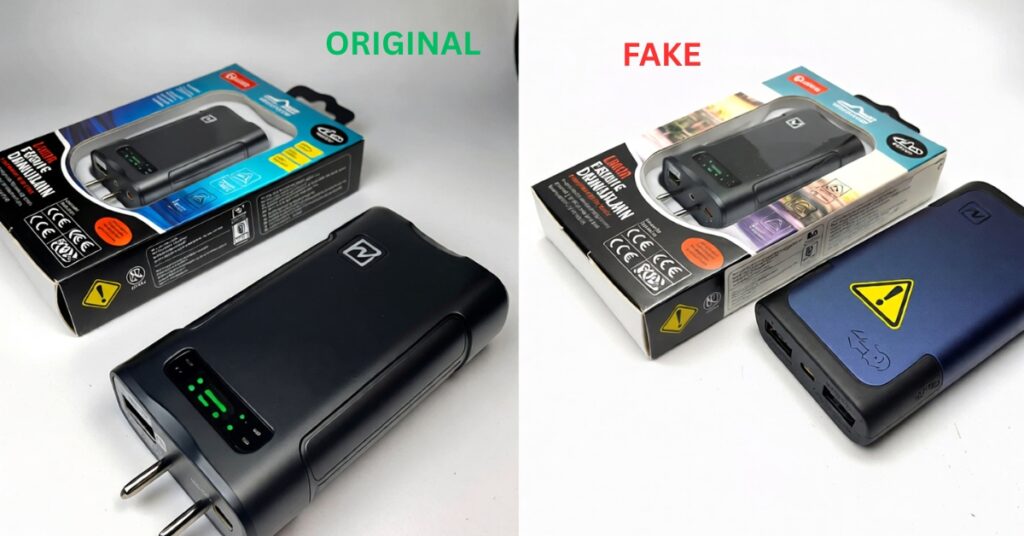
The danger from fake chargers in Pakistani markets isn’t mainly fire or shock though those risks exist. The more common damage is invisible. It happens to the charging IC inside your device over months of use, and by the time you notice it, the repair costs more than genuine accessories would have over a lifetime.
Pakistan’s electronics markets; Hall Road, Hafeez Centre, Saddar, and their equivalents in every major city are full of chargers, cables, and adapters at every price point. The genuine article sits alongside near-perfect visual replicas that are sometimes indistinguishable from the outside.
The risk stratification of fake accessories goes like this, from least to most damaging:
Cheap generic cables. The most common and least dangerous category. Cheap cables usually have thin copper conductors that limit maximum current, meaning your device charges slowly. Prolonged use with thin cables in combination with fast charging can also cause the cable to warm up. Annoying, not catastrophic.
Unregulated chargers.
These are the genuine risk category. A charger with poor voltage regulation delivers output that fluctuates rather than staying at a stable voltage. The accessory quality problem starts at purchase, knowing what to verify before buying a smartphone in Pakistan includes understanding which bundled accessories are genuine and which aren’t.
Your device’s charging IC compensates, it’s designed to but it’s compensating every charge cycle. Over months, the charging IC in the device degrades from the sustained workload of managing inconsistent input. The symptom is a device that charges increasingly slowly, or intermittently, or stops charging at certain percentages. Repairing a damaged charging IC on a modern smartphone costs Rs. 5,000 to Rs. 15,000 at a competent repair shop.
Counterfeit fast chargers.
These are the worst category. A charger claiming to support Qualcomm Quick Charge or USB Power Delivery but containing none of the required circuitry delivers unregulated high voltage to your device. Genuine fast charging protocols involve negotiation between the charger and device, the device requests a specific voltage and current, the charger confirms it can deliver it, and charging begins at that agreed specification. A fake fast charger skips this negotiation and pushes voltage unilaterally. The damage to the charging circuit and sometimes the battery itself can be rapid.
How to verify before buying:
Weight matters. Genuine chargers are heavier than fakes because they contain more internal components actual regulation circuitry, filtering, thermal protection. A charger that feels hollow or unusually light for its size is a red flag.
Certification markings. USB-IF certification for standard chargers, MFi certification for Apple accessories, Qualcomm certification for Quick Charge. These markings on fake products are present but meaningless the certification wasn’t actually obtained. But their complete absence is a clearer red flag.
Heat during charging. A genuine charger gets warm. A fake charger gets hot, noticeably uncomfortable to hold because it’s dissipating energy as heat that a properly regulated charger would be managing internally.
Price. Genuine Samsung fast chargers retail for Rs. 2,500 to Rs. 4,000. A charger claiming to be Samsung-compatible for Rs. 400 is not managing the same internal complexity at a lower cost. It’s managing much less.
Heat Management in Pakistani Conditions
Heat is the single most accelerating factor in battery and component degradation in Pakistani devices more than charging habits, more than software, more than physical handling.
Pakistani summers create conditions that device manufacturers test for but don’t design optimally around. A phone sitting in direct sunlight on a dashboard in Lahore in June is experiencing internal temperatures that would register as overheating on any thermal sensor. A laptop running on a mattress or cushion in a room with no air conditioning during a summer afternoon is thermally throttling its processor and running its battery in heat conditions that permanently accelerate degradation.
For phones:
The 40°C ambient temperature threshold matters. Most manufacturers consider sustained operation above 35°C to 40°C as the boundary between normal use and heat-stressed use. In Pakistani summer conditions, this threshold is routinely exceeded without people realising it.
Specific habits that cause preventable heat damage in Pakistan: leaving phones on car dashboards or seats in parked cars (interior temperatures reach 60°C to 80°C in summer, genuinely dangerous for the battery), gaming while fast charging (the combination of charging heat and processor heat compounds into temperatures the thermal management system struggles with), and using thick silicone or hard plastic cases during summer without removing them during charging.
Thick phone cases trap heat. This is a real and measurable effect. If you use a thick protective case, remove it while fast charging in hot weather. The case’s thermal insulation works in both directions, it keeps heat generated during charging inside the device rather than dissipating to the air.
For laptops:
Laptop cooling depends on airflow through vents. Pakistani homes accumulate specific types of debris that block these vents efficiently: fine cotton dust from textiles, construction dust common in Pakistani urban areas during ongoing development, and the general fine particulate matter in the air of high-density cities.
A laptop vent cleaning every 3 to 6 months is not optional maintenance in Pakistani conditions, it’s the difference between a laptop that runs at full speed and one that throttles its processor to avoid overheating. A student brought in an HP laptop that was barely usable for anything beyond document editing. The processor was throttling to 30% of its rated speed as a thermal protection response. After cleaning the vents and applying new thermal paste to the CPU, it ran at full speed with no throttling.
Cleaning laptop vents doesn’t require opening the chassis. Compressed air into the vent openings with the laptop off removes most of the accumulation. Full cleaning every year or two which involves opening the chassis is worth having done professionally if you’re not comfortable doing it yourself.
Software Updates: What to Actually Do in Pakistan
Blindly updating to the latest software as soon as it’s available is the right habit in most places. In Pakistan, it’s occasionally the wrong one. Major updates on specific carrier configurations have caused connectivity and compatibility issues that took weeks to resolve. The habit worth developing is a 2-week wait, not avoidance.
Software updates fix security vulnerabilities, optimize battery efficiency, and add useful features. Ignoring them entirely is a real security risk, especially on Android devices, where significant vulnerabilities are patched through monthly security updates that accumulate into real attack surface if skipped for months.
But the Pakistani-specific context here is this: major version updates (iOS 18 → iOS 18.1, or Android 14 → 15) occasionally have compatibility issues with Pakistani carrier configurations, certain network bands, or the specific hardware variants sold in Pakistan (which sometimes differ from the global version in minor ways). These issues typically surface in the first two weeks after a major release and get patched quickly.
The practical habit for Pakistan is: install monthly security updates promptly, these are low-risk and high-value. For major version updates, wait two to three weeks and check tech communities (Reddit’s r/Pakistan, local tech forums, or simply asking a tech-aware friend) whether any issues have been reported on your specific device model. Then update.
App updates are different, keep apps updated automatically. Outdated apps create more security and compatibility issues than occasional version delays for the OS itself.
Physical Maintenance That Actually Matters
Ports and Connectors
Charging port degradation in Pakistan has a specific pattern I don’t see mentioned in international maintenance guides: debris accumulation from cotton fibres.
Pakistani homes use cotton clothing and bedding extensively. The fine cotton fibres from these shed constantly into the air and accumulate in phone charging ports and laptop USB ports faster than in most other environments. Compact fibre plugs form in the port over months, preventing charging cables from seating fully. People assume their cable is failing or their port is damaged. Usually the port just needs cleaning.
Use a wooden toothpick or a soft plastic implement not metal to gently clear debris from phone charging ports. A few passes is usually sufficient. Check your charging port before assuming a charging problem has any other cause.
Laptop Keyboards and Trackpads
Pakistani dust is fine and pervasive. It accumulates under keyboard keycaps and around trackpad edges, affecting key travel and occasionally causing stuck keys. Quarterly compressed air cleaning across the keyboard surface prevents accumulation from reaching the point where keys need individual removal for cleaning.
Screen Protection
Tempered glass screen protectors on phones are worth using in Pakistan’s context specifically because of the frequency of power cuts and the associated phone handling, reaching for the phone in the dark, setting it down quickly when the lights go out, the general handling associated with load shedding disruption. A tempered glass protector absorbs minor impacts that would otherwise reach the actual screen.
Maintenance Habits by Impact
| Habit | Impact on Device Lifespan | Pakistan-Specific Priority | Cost |
|---|---|---|---|
| Using genuine/certified charger | Very High | Critical | Low–Medium |
| Removing case during fast charging in summer | High | High in summer | Free |
| Cleaning laptop vents every 3–6 months | High | High (dust conditions) | Free–Low |
| Keeping battery between 20–80% | Moderate | Moderate | Free |
| Clearing phone charging port of debris | Moderate | High (cotton environments) | Free |
| Installing security updates promptly | High (security) | Moderate | Free |
| Not leaving phone in parked cars | Very High | Critical in summer | Free |
| Weekly data backup | No hardware impact | Peace of mind | Free–Low |
Real Cases From the Repair Counter
The charger that cost Rs. 1,200 but damaged a Rs. 35,000 charging IC.
A customer brought in a mid-range Xiaomi phone with a charging fault, the device wouldn’t fast charge, and on some chargers wouldn’t charge at all. Investigation found a damaged charging IC. She had been using a market charger purchased after her original broke. The repair cost Rs. 8,000. Her original Xiaomi charger had been available for Rs. 1,800 from an authorized retailer she didn’t know about.
Accessory authenticity is also a key consideration when buying used devices, this guide covers exactly what to check before buying refurbished or used electronics in Pakistan.
The laptop that throttled because of a blocked vent.
Mentioned earlier, an HP laptop running a full 70% slower than its rated processor speed because dust accumulation had blocked the cooling vent completely. The owner had been using it for over two years without cleaning it. Cleaning took 20 minutes and cost nothing.
The phone battery that swelled from sleeping under a pillow.
A classic and still surprisingly common scenario. A user charged their phone under their pillow overnight for months. The thermal insulation of the pillow, combined with charging heat, raised battery temperature consistently into the range that accelerates degradation and gas production. The battery swelled enough to separate the screen slightly from the chassis. Battery replacement cost Rs. 4,500. The habit cost nothing to change.
The Honest Bottom Line
Device maintenance in Pakistan requires one additional layer of awareness beyond what standard advice provides: the infrastructure your device operates in is more demanding than the environment it was designed and tested for.
Load shedding creates electrical transitions. Summer creates thermal stress. Local markets create accessory risk. Cotton-heavy environments create port debris. These aren’t reasons to be anxious about your device, they’re reasons to be specific about which maintenance habits matter most.
In order of impact:
Use genuine or certified accessories. This is non-negotiable and worth the price difference every single time. No maintenance habit compensates for a consistently bad charging environment.
Manage heat deliberately by removing the case during fast charging in summer. Don’t leave phones in cars. Clean laptop vents.
Update security patches promptly. Wait two weeks for major version updates.
Check your charging port for debris when charging problems appear before assuming the port or cable is failing. Everything else the 20–80% rule, screen protectors, backups is valuable but secondary to these four.
A device maintained with these specific habits in Pakistan outlasts a neglected one by years, not months. The habits are free. The accessories cost a few thousand rupees more than the alternatives. The repair bills they prevent cost multiples of that difference.
