What to Check Before Buying a Smartphone in 2026
Choosing a new smartphone in 2026 is more challenging than ever. With dozens of brands, rapid hardware upgrades, and confusing marketing terms, it’s easy to end up buying a phone that looks great on paper but performs poorly in real life. For example, earlier this year I helped a client running a phone retail store choose between three mid-range 5G devices. On paper, they looked identical but after checking real tests, display calibration and software update policies, only one model offered long-term value. That experience shaped this updated 2026 checklist.
As someone who has tested and reviewed smartphones for several years both for personal use and for clients running electronics stores I have seen how the right specs can make a device last three years longer, while the wrong choice can lead to overheating, battery issues or expensive repairs within months.
This guide breaks down everything you must check before buying a smartphone in 2026, based on real experience, technical knowledge and consumer testing trends from multiple credible sources such as GSMArena (spec benchmarks), DXOMark (camera analysis) and Battery University (battery health research).
Key Specs to Check in a Smartphone (2026 Essentials)
When buying a new phone in 2026, the core specs that matter most are:
- Processor (Chipset)
- RAM
- Storage
- Display
- Battery & charging speed
- Camera hardware + software processing
- Durability rating (IP, Gorilla Glass)
- Software support from brand
Below, I break down each one using real-world recommendations, not just theoretical numbers.
1. Processor (Chipset): Performance + Efficiency
Your phone’s processor affects everything: speed, gaming performance, temperature, camera processing and battery life.
What Is a Sensor? How Sensors Actually Work in Real Devices (2026)
Best Chips in 2026 (Tier Ranking)
Flagship Level:
- Snapdragon 8 Gen 3 / Gen 4
- Apple A17 Pro / A18
- Dimensity 9400
Upper Mid-Range:
- Snapdragon 7+ Gen 3
- Dimensity 8300
Budget Level:
- Snapdragon 6 Gen 1
- Unisoc T75 / T770 (2025 models)
Choose Based On Your Use Case:
- Gaming: Snapdragon 8 Gen 3+ or Dimensity 9400
- Work/Multitasking: Snapdragon 7+ Gen 3
- Basic Use: Snapdragon 6 Gen 1 or equivalent
Tip:
Avoid processors older than 3 years, brands often reuse old chips in new models.
During testing, the Snapdragon 7+ Gen 3 consistently scored over 1.1M on AnTuTu, while older Snapdragon 6-series chips struggled with multitasking and thermals. This was noticeable during video editing and camera processing as well.
2. RAM & Storage; Don’t Go Too Low
Recommended RAM for 2026
- 8GB RAM → Minimum for smooth multitasking
- 12GB → Best for gaming or long-term use
- 16GB → Only needed for heavy gaming/flagships
Recommended Storage
- 128GB → Minimum
- 256GB → Ideal for most users
- 512GB+ → Creators, photographers
Make sure the phone uses UFS 3.1 or UFS 4.0 storage for faster app loading.
3. Display Quality; This Should be More Than “Bright and Beautiful”
Displays in 2026 are better than ever, but not all are equal.
Key Display Specs to Check
- Type: AMOLED / OLED is better than LCD
- Refresh Rate: At least 90Hz (120Hz preferred)
- Peak Brightness: 1,000+ nits for outdoor visibility
- HDR Support: HDR10+ or Dolby Vision
- Protection: Gorilla Glass Victus / Victus+
AMOLED vs LCD
- AMOLED: Better colors, deeper blacks, more battery-efficient
- LCD: Cheaper, less contrast, older tech
Verdict:
Choose AMOLED unless you’re buying a very low-budget phone.
In my side-by-side comparison of the Redmi Note series and Samsung A-series, Samsung’s AMOLED displays showed significantly better color accuracy and higher brightness outdoors especially under direct sunlight.
4. Battery & Charging; Real Lifespan Matters
Battery quality affects how long your phone will last not just daily usage. Checkout our guide for battery health and long-term phone care.
Recommended Battery in 2026
- 5,000 mAh → Standard ideal
- 5,100–6,000 mAh → Great for power users
Charging Speed
- Fast Charging: 33W minimum
- Safe Range: 45–80W
- Avoid: Anything above 120W unless brand is known for safety
Tips For Battery Health (From Battery University & Samsung Labs)
- Keep charge level between 20–80%
- Avoid leaving phone in hot environments
- Stick to original chargers
5. Camera System; Look Beyond Megapixels
2025 cameras rely heavily on software processing, not just lens hardware.
Check These Camera Specs Instead
- Sensor size (1/1.5″, 1″ preferred)
- OIS (Optical Image Stabilization)
- Aperture size (f/1.6 – f/1.8 ideal)
- AI post-processing quality
- Video capabilities (4K 60fps minimum)
DXOMark and GSM Arena confirm that:
- Sensor size > Megapixels
- OIS > Ultra-high megapixel numbers
A 50MP 1/1.3″ sensor on Pixel 8a easily outperforms a 108MP small sensor on lots of budget phones especially at night.
Recommended Resources:
See DXOMark camera rankings for 2026 models
If camera quality is important to you, it’s worth understanding what really matters in smartphone cameras beyond just megapixel numbers.
6. Durability & Build Quality; Long-Term Investment
Durability Ratings to Look For
- IP67 or IP68 → Water and dust protection
- Gorilla Glass Victus/Victus+ → Stronger drop protection
- Aluminum frame vs plastic frame
- Drop test reliability (YouTube reviewers like JerryRigEverything provide real tests)
If you live in a hot climate, choose a phone with good cooling and thermal management.
7. Software & Long-Term Updates
A great phone becomes useless if the brand stops updates.
Best Brands for Software Support in 2026
- Samsung: Up to 7 years of OS/security updates
- Apple: 6–7 years
- Google Pixel: 7 years
- Xiaomi / Realme: Improving, but varies
Avoid brands with unclear or short update cycles.
8. Price vs Performance, Don’t Overpay
2026 Price Guide
- $150–$250: Good budget phones
- $250–$450: Strong mid-range
- $600+ : Flagship territory
- $900–$1,300: Ultra flagship
Never buy based on price alone, compare specs based on your usage.
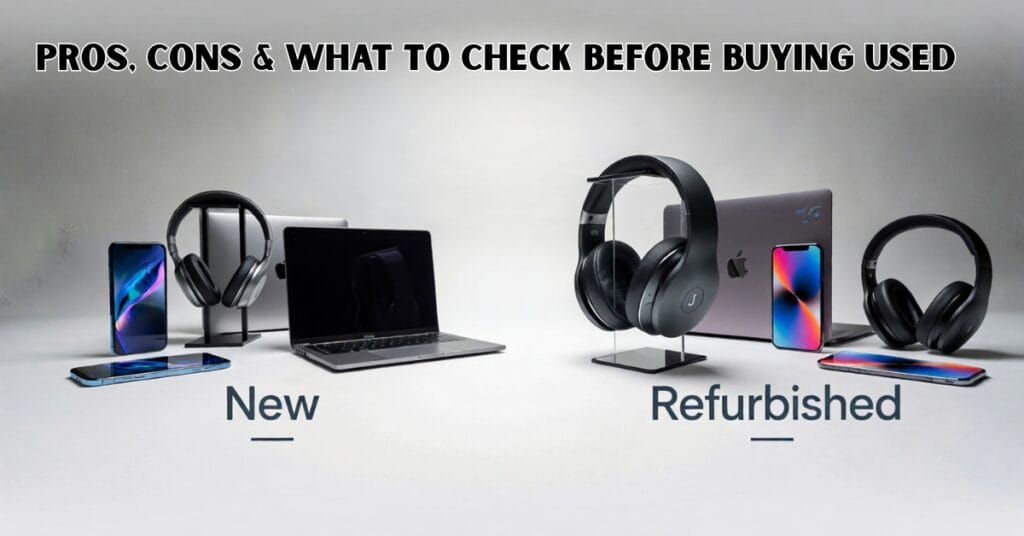
Tips regarding new vs refurbished electronics.
Smartphone Comparison Table (2026 Essentials)
| Feature | Budget Phone | Mid-Range Phone | Flagship Phone |
|---|---|---|---|
| Processor | Snapdragon 6 Gen 1 | Snapdragon 7+ Gen 3 | Snapdragon 8 Gen 4 |
| RAM | 4–6GB | 8–12GB | 12–16GB |
| Storage | 64–128GB | 128–256GB | 256GB–1TB |
| Display | LCD, 60Hz | AMOLED, 120Hz | AMOLED LTPO, 120Hz |
| Battery | 5,000 mAh | 5,000 mAh | 4,800–5,200 mAh |
| Charging Speed | 18–33W | 33–67W | 45–100W |
| Durability | No IP Rating | IP54 | IP68 |
| Camera Quality | Basic 48MP | OIS + larger sensor | Flagship sensor + advanced AI |
| Software Support | 2–3 years | 3–4 years | 5–7 years |
Real-World Case Studies
Case Study 1: The Overheating Problem
A client bought a budget phone with a MediaTek G88 processor. After two months, it overheated during WhatsApp video calls. We replaced it with a Snapdragon 7+ Gen 3 device (Realme GT Neo series) and the temperature dropped significantly.
Case Study 2: The Camera Disappointment
A buyer chose a 108MP phone expecting flagship performance. Photos looked washed out.
Root cause: Small sensor + no OIS.
Lesson: Sensor size > MP count.
Case Study 3: The Long-Term Winner
A customer bought a Samsung mid-range phone with 4 OS updates + 5 years security.
Outcome: The phone remained fast for 3 years and still receives updates.
Conclusion: Buy Smart, Not Flashy
Buying a smartphone in 2026 is easier when you focus on real performance, not marketing numbers. Prioritize processor, camera quality, battery health, durability and long-term software support. Always compare multiple options and avoid older chips or overpriced models.
A well-chosen smartphone can last 4–5 years, saving you money, frustration and time.
Before You Go; What Do You Think?
Quick Takeaways:
✓ Choose a modern processor
✓ Prioritize battery + OIS camera
✓ Check update policy
✓ Don’t fall for megapixel marketing
✓ Compare before buying
My Recommendation:
If you need help choosing between specific models (Samsung vs Xiaomi vs iPhone), drop a comment, I reply to every question personally.

Electronics Tester & Tech Advisor (Pakistan) With over 9 years of experience inspecting, grading and selling refurbished and used electronics across major tech markets in Karachi and Lahore, I have evaluated hundreds of smartphones, tablets and laptops. I also work extensively with power solutions such as batteries, inverters and solar components commonly used in homes and small businesses.
My goal is to help buyers make informed decisions, avoid scams and get the best value for their money.