With rising electricity costs and frequent load-shedding across Pakistan, more homeowners and small businesses are turning toward solar energy. Over the past few years working with local installers in Lahore and Karachi, I’ve seen hybrid solar inverters become the preferred option for people who want both bill reduction and reliable backup power.
This guide explains how hybrid inverters work, what features matter, how to size one for your home and what real buyers in Pakistan have experienced.
What Is a Hybrid Solar Inverter?
A hybrid solar inverter is a system that manages three power sources:
- Solar panels
- Batteries
- Grid electricity
Instead of relying on one source at a time, the hybrid inverter distributes and switches between them automatically. This is particularly useful in Pakistan where load-shedding is unpredictable and utility rates have steadily increased.
NEPRA’s annual energy reports (publicly available) have documented the rise in residential electricity consumption and tariff adjustments over recent years.
How a Hybrid Inverter Works
1. During the Day
Solar power runs your home first. Excess energy is used to charge batteries. Any energy left after this can be fed back into the grid if you have net metering.
2. During Load-Shedding or at Night
The battery provides power. Once battery levels drop, the inverter automatically switches to grid power.
3. In Mixed Mode
Solar provides a portion of the load, while the grid supplies the rest. This reduces monthly bills even if you do not use batteries.
This automated power management is the main reason hybrid inverters outperform traditional off-grid or on-grid models.
Why Hybrid Inverters Make Sense in Pakistan
- Long and frequent outages in summer
- High utility tariffs, especially during peak hours
- Fast adoption of renewable energy in urban areas
- Better compatibility with modern battery technologies such as LiFePO4
Because they provide both energy savings and backup, hybrids fit the needs of most households and small shops.
Types of Hybrid Inverters in Pakistan

Low-Frequency Hybrid Inverters
- Durable and heavy-duty
- Handle higher surge loads (like refrigerators and air conditioners)
- Long lifespan
- Higher price
Best for: Larger homes or shops with multiple appliances.
High-Frequency Hybrid Inverters
- Compact and lighter
- More efficient
- Lower cost
Best for: Apartments, small homes or offices with moderate loads.
Hybrid Inverters with MPPT Controllers
MPPT (Maximum Power Point Tracking) controllers improve solar panel efficiency by adjusting to real-time temperature and light conditions. This is really beneficial in Pakistan’s hot climate.
Key Features to Look for in 2026
Pure Sine Wave Output
Ensures stable power for electronics, preventing damage or noise.
MPPT Solar Charge Controller
More efficient than older PWM technology.
Battery Compatibility
The inverter should work with:
- Lead-acid
- AGM
- Gel
- Lithium-ion
- LiFePO4
LiFePO4 batteries are recommended for their safety and long lifespan.
Battery lifespan and safety depend heavily on correct charging behavior and usage habits, similar to what we’ve covered in our guide on battery health and long-term care for electronics.
Wide PV Input Range
Allows flexible panel configurations.
Surge Capacity
Important for appliances that require high startup power.
Remote Monitoring (Wi-Fi/App Support)
Helpful for tracking battery health, solar production, and system usage.
Warranty and Service Centers
When choosing a hybrid inverter, warranty coverage and access to service centers in Pakistan should be a key consideration. Reliable after-sales support can make a significant difference in long-term performance and maintenance costs.
Commonly Used Brands in Pakistan (Based on Reliability and Support)
For residential installations, technicians and installers in Pakistan commonly work with a mix of international manufacturers and locally available electronics suppliers, including:
These brands are widely used due to the availability of technical documentation, spare parts and service support through official or regional channels.
If budget is a concern, many buyers also consider refurbished equipment, but there are important risks to understand, as explained in our guide on new vs refurbished or used electronics.
How to Size a Hybrid Inverter for Your Home/Office

Step 1: Calculate Load Requirements
Example load for a typical home:
- 3 fans = 240W
- 6 LED lights = 90W
- Refrigerator = 200W
- TV = 120W
Total = 650W (round up to 1000W)
Step 2: Add a Safety Margin
Inverters should be sized at 30% above the total load.
1kW x 1.3 = 1.3kW minimum.
Most homes in Pakistan require 3kW or 5kW systems.
Step 3: Panel Sizing
For ideal performance:
Inverter size × 1.5
Example: 5kW inverter → 7.5kW solar array.
Step 4: Battery Sizing
48V battery systems offer better efficiency for homes.
Choosing the right hybrid inverter starts with understanding your actual power needs, which is why we recommend first reading our guide on which battery inverter is right for 2000W–5000W systems.
Best Battery Type for Hybrid Inverters in 2026
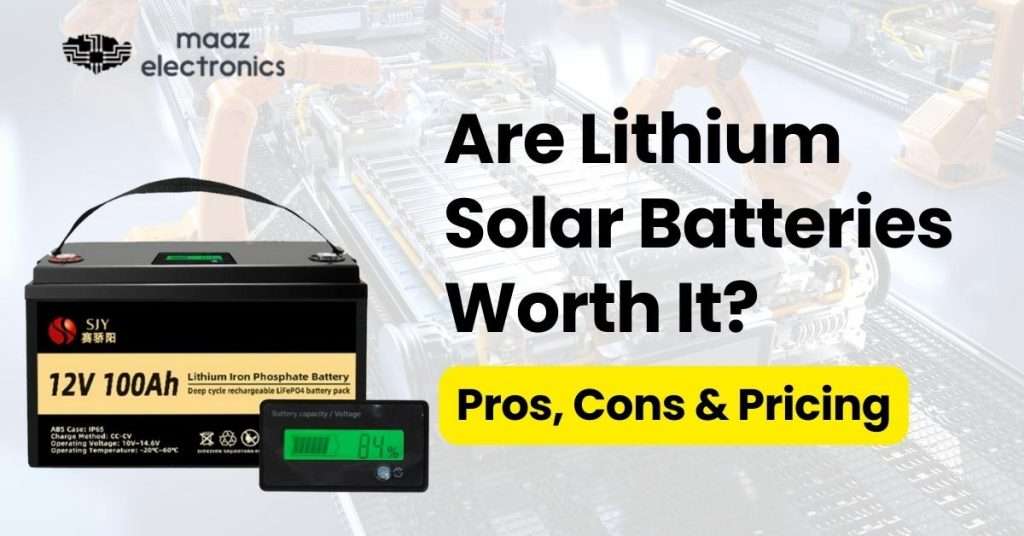
Hybrid inverters perform very differently depending on the battery chemistry, especially when paired with modern lithium setups, which we explain in detail in our article on whether lithium solar batteries are worth it.
LiFePO4 Batteries
- Long lifespan (4000–7000 cycles)
- High temperature tolerance
- Lightweight
- Low maintenance
General technical information from Battery University.
Real-World Case Studies from Pakistan
Case Study 1: 5kW Hybrid System in Lahore
A household in Johar Town installed:
- 5kW hybrid inverter
- 6.6kW panels
- 48V LiFePO4 battery
Result:
Electricity bills reduced from roughly Rs 32,000 to Rs 7,000 per month while maintaining uninterrupted power during load-shedding.
Case Study 2: Small Barber Shop in Karachi
A shop operating 12+ hours per day installed:
- 3.2kW hybrid inverter
- Solar-only setup (no batteries)
Result:
Power costs decreased significantly and the shop could operate fans and lighting even during hot-season outages.
Case Study 3: Rural Farm House in Multan
Installed:
- 5kW hybrid inverter
- 10kW panels
- LiFePO4 battery bank
Result:
The owner achieved complete off-grid independence and eliminated fuel costs previously spent on generators.
Common Mistakes to Avoid
- Choosing the wrong battery voltage
- Buying an inverter without MPPT
- Using low-quality wiring or breakers
- Ignoring warranty and service availability
- Installing the wrong tilt angle for panels
- Undersizing the solar array
Conclusion
Hybrid solar inverters offer a practical solution to Pakistan’s electricity challenges by combining energy savings with reliable backup power. They are versatile, cost-effective in the long run and compatible with modern battery technologies available in 2026.
If you are considering switching to solar or upgrading your existing system, understanding these features will help you make a confident and informed decision.

Electronics Tester & Tech Advisor (Pakistan) With over 9 years of experience inspecting, grading and selling refurbished and used electronics across major tech markets in Karachi and Lahore, I have evaluated hundreds of smartphones, tablets and laptops. I also work extensively with power solutions such as batteries, inverters and solar components commonly used in homes and small businesses.
My goal is to help buyers make informed decisions, avoid scams and get the best value for their money.