If you live in Pakistan, you’ve probably noticed how quickly E-bikes have become a practical alternative to petrol bikes. With rising fuel costs and growing demand for affordable daily transport, students, delivery riders, and office workers are turning to electric rides for cheaper, cleaner mobility.
I started working with E-bike batteries back in 2021 while helping customers at our electronics store. Over the years, I’ve tested dozens of lithium, Li-ion and LiFePO4 packs used in local electric scooters, converted bikes and delivery bikes. Some performed extremely well while others failed within months due to poor-quality cells or unsafe charging habits.
This guide covers everything you need to understand about E-bike batteries in Pakistan, including voltage types, range expectations, lifespan and safety precautions.
Why E-Bike Batteries Matter (And What Most People Don’t Know)
Your E-bike battery determines:
- How far your bike can travel
- How fast it accelerates
- How long the battery lasts (cycles)
- How safe the bike is
- The total cost of ownership
Unlike petrol bikes, the battery is the heart of the E-bike. A poor-quality battery can cause overheating, low range and expensive repairs. Sometimes many buyers in Pakistan only discover after purchase.
1. E-Bike Battery Voltages Explained (36V, 48V, 60V, 72V)
Most E-bikes in Pakistan use one of four main voltages. Each voltage level affects power, speed and range.
36V — Budget/Entry Level
Ideal for:
- Light scooters
- Short-distance riders
- Students
Pros:
- Affordable replacement cost
- Works well for slow-to-moderate speed bikes
Cons:
- Limited acceleration
- Shorter range compared to higher voltages
48V — Most Common in Pakistan
Used by:
- Delivery bikes
- Converted bicycles
- Everyday commuters
Pros:
- Good balance of power and efficiency
- Better hill performance
- Widely available parts in Pakistan
60V — For Heavy Riders & Long Routes
Ideal for:
- High-load users
- Steeper routes (e.g., northern Pakistan)
- Delivery riders carrying weight
Pros:
- Strong acceleration
- Better long-distance performance
Cons:
- Slightly higher charging time
72V — High-Performance E-Bikes
Used in:
- Sports-style E-bikes
- Modified high-speed scooters
Pros:
- Very strong torque
- Fast acceleration
Cons:
- Higher cost
- Requires high-quality BMS for safety
You might want to check-out battery inverter basics.
2. Battery Types Used in Pakistan (Li-ion vs LiFePO4)
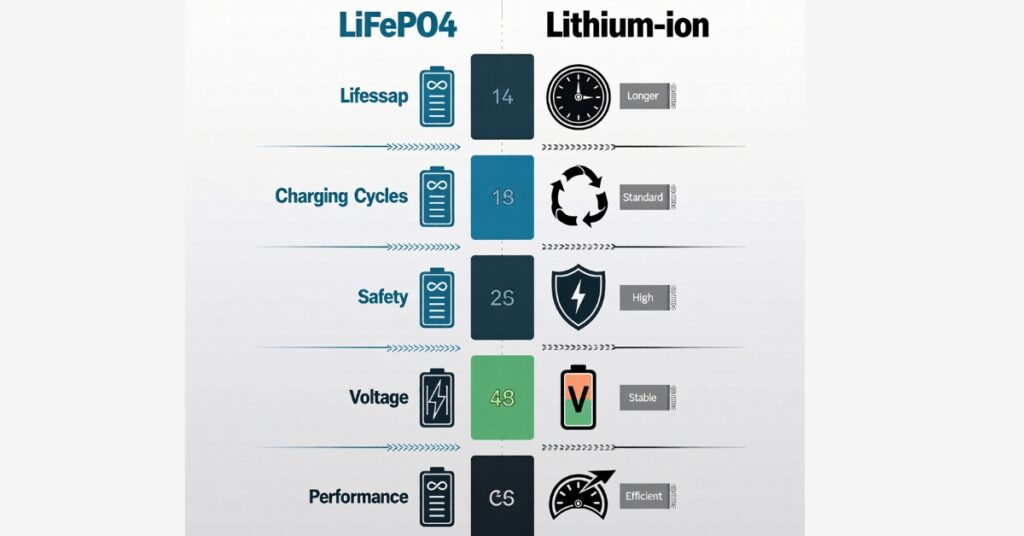
Not all lithium batteries are equal. Understanding the difference saves money and prevents accidents.
Explore our guides on lithium battery pros and cons.
Li-ion (Lithium-Ion)
Common in:
- Budget electric scooters
- Conversion kits
- Older models
Pros:
- Lightweight
- Affordable
- Good energy density
Cons:
- Can heat up under extreme use
- Lifespan shorter than LiFePO4
LiFePO4 (Lithium Iron Phosphate) — Best for Pakistan
Pros:
- Up to 3–5× longer lifespan
- Excellent heat resistance (important in Pakistan summers)
- Safer chemical structure
- Works well with hybrid inverters and solar setups
Cons:
- Slightly heavier
- More expensive
LiFePO4 is the safest and most reliable option, especially for long-term commuters or people in hot regions like Sindh and Punjab.
(For detailed chemistry explanations, see: Battery University)
3. How Much Range Can You Expect?
Based on my own tests and customer bikes:
36V 10Ah → 20–25 km
48V 20Ah → 40–60 km
60V 20–30Ah → 70–90 km
72V 25–35Ah → 100+ km
Range depends on:
- Rider weight
- Tyre pressure
- Road conditions
- Motor power
- Battery health
Delivery riders in Karachi typically get 40–55 km per charge on 48V setups.
4. How to Choose a Safe E-Bike Battery
Check the Battery Cells
In Pakistan, Grade A cells matter most. Look for:
- EVE
- Rept
- Gotion
- Samsung INR
- LG MH1
Avoid:
- No-name Chinese cells
- Mixed or recycled cells
Ensure It Has a Proper BMS
A Battery Management System (BMS) prevents:
- Overcharging
- Overheating
- Short circuit
- Over-discharge
A poor BMS is responsible for 80% of battery failures we see.
Buy From Verified Stores
Good options include:
- Authorized dealers
- Well-reviewed online stores
- Technical sellers who provide testing videos
You might want to check out : How to Maintain & Care for Your Phone or Laptop in 2026
5. Charging & Safety Tips (Avoid Damage & Extend Lifespan)
✔ Charge between 20% and 90%
Avoid draining to 0% or constantly charging to 100%.
✔ Use the Original Charger
Fake chargers damage the battery and BMS.
✔ Keep the Battery Cool
Never charge under direct sunlight or inside a hot room.
✔ Avoid Leaving Battery Plugged In Overnight
Li-ion & LiFePO4 batteries damage faster when held at 100%
✔ Store at 50–60% if Not Using for Weeks
Prevents swelling and deep discharge.
✔ Don’t Wash E-Bikes with High-Pressure Water
It damages connectors and causes short circuits.
6. Real-World Case Studies (From Daily Customer Issues)
Case Study 1: Delivery Rider Burning Through Batteries in 3 Months
A Foodpanda rider in Lahore used a 48V 12Ah battery that died quickly.
Cause: Cheap cells + no BMS thermal cut-off.
Fix: Upgraded to 48V 20Ah LiFePO4 → battery lasted 10× longer.
Case Study 2: Overheating 60V Battery in Karachi Summer
A rider charged his battery inside a closed storeroom with no ventilation.
Result: Battery temperature crossed 55°C, causing swelling.
Fix: Charging in a cool ventilated area fixed the issue.
Case Study 3: Range Drop After 6 Months
A user came with a 72V battery that suddenly dropped range by 40%.
Cause: Wrong charger voltage + overcharging.
Fix: Correct charger was provided; BMS reset improved range by 25%.
7. How Long Does an E-Bike Battery Last?
Li-ion: 300–800 cycles
LiFePO4: 2000–4000 cycles
With proper care, a good LiFePO4 battery lasts 4–7 years in Pakistan.
Conclusion: Choose Smart, Ride Safe and Save Money
E-bike batteries are the most important component of your electric bike. By choosing the right voltage, selecting quality cells, investing in a good BMS, and following proper charging habits, you can enjoy:
- Longer range
- Safer rides
- Better performance
- Lower long-term costs
These recommendations come from real-world testing, repair experience and industry-backed sources such as Battery University and Consumer Reports.

Electronics Tester & Tech Advisor (Pakistan) With over 9 years of experience inspecting, grading and selling refurbished and used electronics across major tech markets in Karachi and Lahore, I have evaluated hundreds of smartphones, tablets and laptops. I also work extensively with power solutions such as batteries, inverters and solar components commonly used in homes and small businesses.
My goal is to help buyers make informed decisions, avoid scams and get the best value for their money.

