Pressure washers are powerful tools, but their real effectiveness comes from something much smaller the nozzle. Whether you’re washing your car, cleaning a driveway or removing stubborn grime, the nozzle determines how much pressure you get, how wide the spray pattern is and how safe the cleaning process will be.
Most people focus on PSI and pump strength but the nozzle controls up to 90% of the actual cleaning outcome. Choosing the wrong one can damage paint, waste water or leave surfaces partially cleaned.
You can explore all our pressure washer nozzles and car wash tools here on our Maaz Electronics Store.
This guide explains how pressure washer nozzles work, the science behind them and how to pick the right type for every cleaning task.
How Pressure Washer Nozzles Work
Every nozzle controls two major things:
- Water pressure (force)
- Spray angle (coverage)
Nozzle has a tiny internal opening, called an orifice, that determines how fast and how much water exits the machine. By changing the size and shape of that opening, pressure washers can produce anything from a wide, gentle rinse to a powerful pinpoint jet.
1. Orifice Size – The Power Controller
The size of the nozzle opening determines how much pressure is created.
- Smaller orifice = higher pressure, lower water flow
Best for stubborn dirt, driveways, tiles and heavy grime. - Larger orifice = lower pressure, higher water flow
Best for car paint, bike washing and delicate surfaces.
Why Orifice Size Matters
A nozzle that’s too small for your machine can:
- Overstress the motor
- Reduce the lifespan of your pump
- Cause inconsistent spray output
Too large nozzle :
- Lowers pressure
- Makes cleaning inefficient
- Wastes water
2. Spray Angles – From Narrow Jet to Wide Rinse
According to leading industry standards, spray angle determines cleaning pressure and coverage.
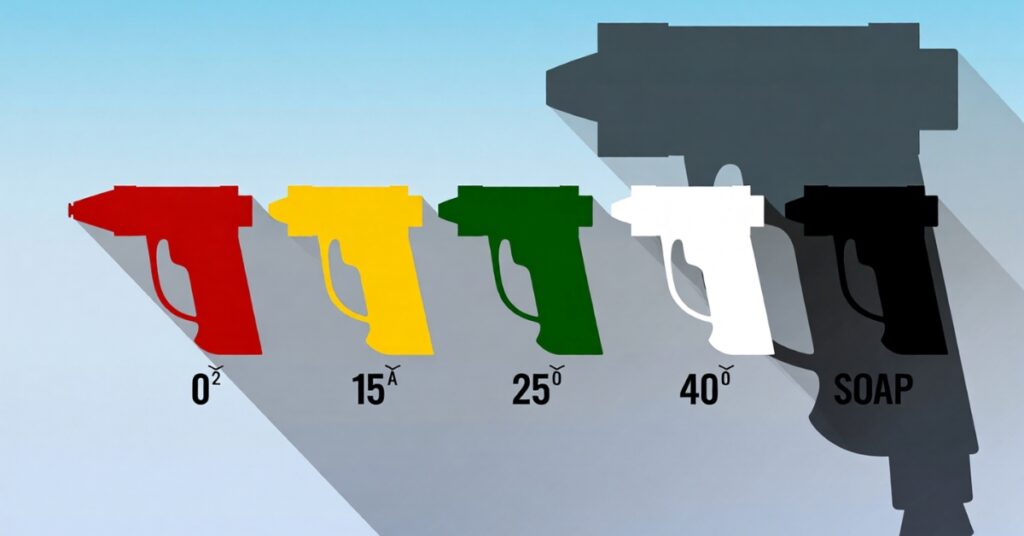
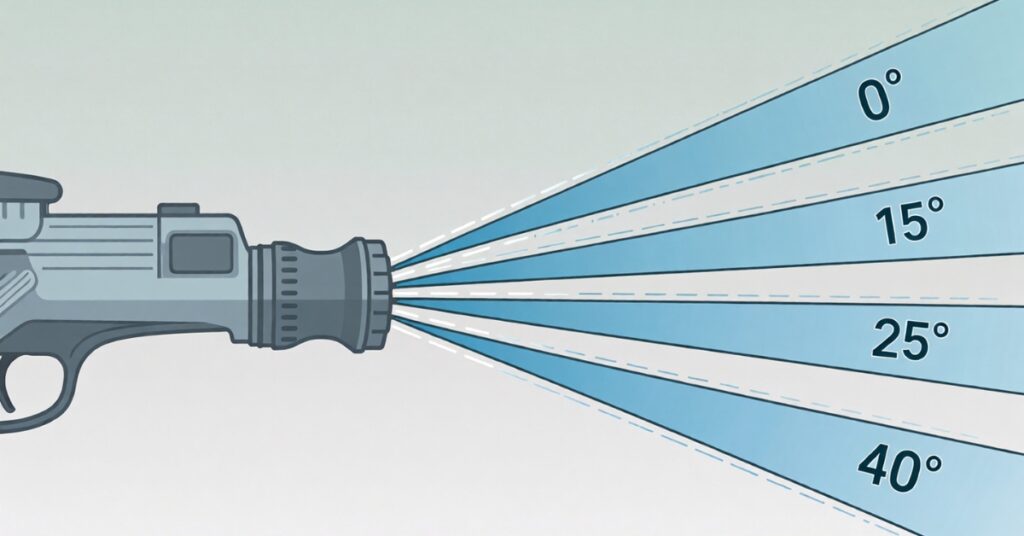
Spray angles determine how wide the water spreads. These are the standard nozzle color codes:
Red Nozzle (0°) — Maximum Pressure
- Spray Angle: 0°
- Best For: Rust, metal, concrete, extremely tough stains
- Warning: Very risky for car paint, wood and delicate surfaces.
Yellow Nozzle (15°) — Heavy Cleaning
- Spray Angle: 15°
- Best For: Driveways, tiles, garage floors, stubborn dirt
- Reason: Strong enough to remove tough grime without the extreme danger of a 0° nozzle.
Green Nozzle (25°) — All-Purpose Cleaning
- Spray Angle: 25°
- Best For: Cars, bikes, windows, home siding, general outdoor cleaning
- Why It’s Popular: Safe and versatile for most surfaces.
White Nozzle (40°) — Gentle Rinsing
- Spray Angle: 40°
- Best For: Rinsing soap, washing delicate surfaces like wood, glass and painted areas
- Advantages: Wide spray for safe cleaning.
Black Nozzle (Soap Nozzle) — Detergent Application
- Spray Angle: 65°
- Best For: Applying soap or detergent using low pressure
- Note: Use before rinsing with Green or White nozzle.
Understanding the Risk
0° red nozzle increases pressure so much that it can cut wood, peel paint and damage car surfaces.
For anything automotive, 25° or 40° is the safest.
3. Water Flow Rate (GPM) – The Real Cleaning Power
While PSI creates force, GPM determines how fast dirt is washed away.
- Higher GPM = better rinsing, faster cleaning
- Lower GPM = concentrated pressure but slower performance
For cars and regular home use, balanced pressure + higher flow works best.
Understanding pressure washer nozzle types and colour coding.
Which Nozzle Should You Use? (Simple Breakdown)
Best for Car Owners
- Pre-rinse → 40° white nozzle
- Main wash → 25° green nozzle
- Stubborn dirt (rims, tires) → 15° yellow nozzle
For Home Cleaning
- Walls, fences → 25°
- Floors, tiles → 15°
- Soap → Black nozzle
For Heavy-Duty Cleaning
- Rust, concrete, machinery → 0° red nozzle (use carefully)
Best Nozzles for Different Cleaning Tasks (Simple Breakdown)
Car Wash:
Make use of a 25° or 40° nozzle. These provide medium pressure and are very safe for car paint.
Bike Cleaning:
A 25° nozzle works best. It gives medium pressure while staying safe for delicate bike parts.
Driveway Cleaning:
Go with a 15° nozzle. It delivers high pressure and offers medium safety, great for concrete but avoid fragile surfaces.
Removing Tough Stains:
Use a 0° nozzle only for stubborn rust or grime. It produces very high pressure and has low safety, so avoid using on paint or soft materials.
Applying Soap:
Choose the black soap nozzle (65°). It uses low pressure and is completely safe, designed specifically for detergent.
Rinsing Delicate Areas:
The 40° nozzle is ideal. It provides low pressure and is very safe for windows, car paint and sensitive surfaces.
Real Mistakes People Make With Pressure Washer Nozzles
1. Making use of the Red Nozzle on Cars
This can strip paint, cut rubber seals and damage headlights.
2. Holding the Nozzle Too Close
Always maintain 8–12 inches distance on cars and delicate surfaces.
3. Not Matching Nozzle Size to Pump Pressure
Incorrect sizing reduces cleaning power and can harm the machine.
4. Using Only One Nozzle for Everything
Efficiency drops by 40–60% when using the wrong spray pattern.
How to Choose the Right Nozzle
A. Identify the Cleaning Surface
- Smooth/painted: wide spray (25°–40°)
- Rough surfaces: narrow spray (0°–15°)
B. Match Your Pressure Washer’s PSI
Example:
- 70–100 bar → use wider angles
- 120–150 bar → balanced use
- 150+ bar → avoid 0° unless needed
C. Look for Adjustable Nozzles
If you want convenience, adjustable multi-spray nozzles allow:
- Fan spray
- Jet spray
- Soap spray
- Angled spray
These are ideal for everyday use.
Recommended Nozzles

Here are only two practical options commonly used by car owners in Pakistan:
1. Adjustable 6-Hole Brass Spray Nozzle
Best for:
- Cars, bikes, home cleaning
- Switching between wide and narrow spray instantly
2. High-Pressure Nozzle With Bendable Rod
Best for:
- Underbody cleaning
- Hard-to-reach angles
- High pressure tasks
You might want to check maintaining electric tools
Maintenance Tips to Make Nozzles Last Longer
✔ Clean the orifice weekly to remove mineral deposits
✔ Flush the nozzle after each use
✔ Avoid dropping metal nozzles—they misalign easily
✔ Store in a dry box to prevent rust
✔ Replace worn or clogged nozzles to maintain pressure efficiency
A worn nozzle can reduce PSI by 25–40% without you noticing.
For more technical details on nozzle care, check how pressure washer nozzle angle and PSI/GPM affect cleaning results.
Conclusion
Pressure washer nozzles may look small, but they control nearly everything about the cleaning process. Understanding spray angles, orifice sizes, and water flow helps you clean faster, protect surfaces and reduce water waste.
Whether you’re washing a car, cleaning tiles or handling heavy-duty dirt, the right nozzle ensures maximum performance and safety. With the correct choice and proper maintenance, your pressure washer will deliver professional results every time.
You might also want to check-out tips on New vs Refurbished electronics

Electronics Tester & Tech Advisor (Pakistan) With over 9 years of experience inspecting, grading and selling refurbished and used electronics across major tech markets in Karachi and Lahore, I have evaluated hundreds of smartphones, tablets and laptops. I also work extensively with power solutions such as batteries, inverters and solar components commonly used in homes and small businesses.
My goal is to help buyers make informed decisions, avoid scams and get the best value for their money.