

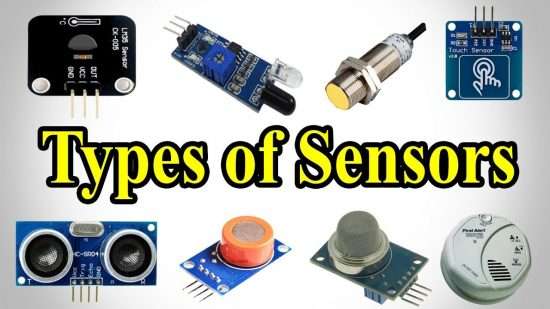
What Is a Sensor? How Sensors Actually Work in Real Devices (2026) Leave a comment
A Small Failure That Shut Down a Whole System
A while back, I was helping troubleshoot an AC/DC ceiling fan that kept shutting itself off after a few minutes of use. On paper, everything looked fine; stable power, good wiring no visible motor damage. Most people would have blamed the controller board or assumed the fan was defective.
The real problem turned out to be much simpler.
A tiny temperature sensor mounted near the motor had drifted out of range. It wasn’t “dead,” but it was no longer reading heat accurately. As a result, the fan thought it was overheating and kept shutting itself down to protect the motor.
Once that sensor was replaced, the fan ran perfectly again.
That experience reinforced something I’ve seen many times in electronics:
when a sensor fails, the entire system loses awareness. And when awareness is gone, devices behave unpredictably.
This is why sensors matter far more than most users realize.
Sensors Are the “Awareness Layer” of Electronics
At a practical level, a sensor is a component that detects what’s happening in the physical world and translates it into a signal electronics can react to.
That “something” could be:
- Heat building up inside a motor
- Light levels dropping at dusk
- Current rising beyond safe limits
- A hand moving close to a surface
But here’s the key insight many explanations miss:
Electronics don’t fail because they can’t act, they fail because they can’t sense correctly.
Without sensors, devices are blind. With bad sensors, they’re misinformed; which is often worse.
This is why engineering standards bodies like IEEE treat sensors as the first layer of any control system, not an accessory.
How Sensors Work — Explained Through Real Behavior

Rather than getting lost in formulas, it helps to look at what actually happens inside devices you use every day.
1. Something Changes in the Real World
A motor heats up. Sunlight increases. A battery voltage drops. Someone walks past a doorway.
2. The Sensor Reacts Physically
Depending on its design, the sensor’s material changes:
- Resistance shifts
- Voltage output changes
- Current flow alters
This reaction is not “smart.” It’s purely physical.
3. Electronics Interpret the Signal
A controller reads the signal and compares it against safe or expected values.
If the reading crosses a threshold, the system reacts:
- Slows down
- Adjusts brightness
- Activates cooling
- Shuts down entirely
When this chain works, devices feel intelligent.
When it breaks, devices feel “possessed.”
Sensors You’re Already Relying On (Often Without Knowing)
Temperature Sensors: The Silent Protectors
In my experience, temperature sensors are responsible for preventing more damage than any other component.
They’re critical in:
- Ceiling fans and air conditioners
- Laptops and smartphones
- Solar charge controllers and inverters
One common mistake I see is people bypassing thermal sensors during repairs to “test” a device. That might make it run briefly but it removes the only thing preventing long-term damage.
Motion Sensors: Convenience With Boundaries
Motion sensors use infrared or microwave reflections to detect movement.
They’re everywhere:
- Security lights
- Automatic doors
- Smart home systems
Poor placement is the biggest issue here. I’ve seen outdoor lights that trigger constantly because a sensor was aimed toward moving trees instead of walking paths.
Pressure Sensors: When Force Matters
Pressure sensors convert physical force into electrical signals.
You’ll find them in:
- Water pumps
- Vehicle braking systems
- Medical devices
Accuracy matters here. Cheap pressure sensors tend to drift over time, leading to misreadings that cause inefficiency or safety risks.
Light Sensors: More Than Just Brightness
Light sensors don’t just make screens dim or brighten.
They:
- Improve battery life
- Reduce eye strain
- Automate outdoor lighting systems
In solar streetlights, a poorly calibrated light sensor can cause lights to turn on too early wasting stored energy.
Proximity Sensors: Small, Fast, Easy to Miss
Your phone’s screen turning off during calls? That’s a proximity sensor doing its job.
When these fail, users often think the phone is “buggy,” when the issue is simply a misreading sensor.
Current and Voltage Sensors: The Guardians of Power Systems
In solar and backup power systems, current and voltage sensors are non-negotiable.
They protect against:
- Overcharging batteries
- Deep discharge
- Load imbalance
- Inverter failure
I’ve seen entire battery banks destroyed because one cheap sensor reported incorrect values.
Advanced battery systems rely on sensors used in battery monitoring to detect temperature, voltage and current irregularities.
Where Sensors Quietly Run Everyday Life (2026 Reality)

By 2026, sensors are no longer “advanced technology” they’re infrastructure.
They’re embedded in:
- Home appliances
- Smartphones and wearables
- Renewable energy systems
- Vehicles
- Medical monitoring equipment
Industry tracking from platforms like IEEE Spectrum and Statista consistently shows that growth isn’t just in more sensors — but in better placement and smarter interpretation.
Three Real Examples That Show Why Sensor Quality Matters
1. AC/DC Ceiling Fans in Unstable Power Environments
Modern fans rely on temperature and current sensors to:
- Prevent motor burnout
- Adjust speed safely
- Switch between AC and DC input
In regions with unstable power, sensor accuracy often matters more than motor size.
Learn how to troubleshoot AC/DC fan issues Here
2. Smartphone Camera Sensors vs Megapixels
Camera testing platforms like DXOMark repeatedly demonstrate that:
- Sensor size
- Light sensitivity
- Signal processing
…matter more than raw megapixel count.
I’ve personally seen lower-resolution sensors outperform higher ones in low light simply because they handle noise better.
3. Solar Battery Protection Systems
Solar setups live or die by sensor accuracy.
Voltage and temperature sensors decide:
- When charging stops
- When loads disconnect
- How long batteries last
Skipping sensor quality here is false economy.
Why Sensors Fail (And What People Get Wrong)

Sensors don’t usually fail dramatically. They fail quietly.
Common causes include:
- Long-term heat exposure
- Moisture ingress
- Power surges
- Low-quality materials
The biggest mistake users make is assuming failure must be obvious. In reality, a sensor can be “slightly wrong” and still cause major problems.
Choosing Between Cheap and Quality Sensors
Here’s a trade-off I’ve learned the hard way:
- Cheap sensors work until they don’t
- Quality sensors fail less often and fail predictably
In systems involving heat, power or safety, sensors are not the place to cut corners.
Why Sensors Will Matter Even More Going Forward
As systems become:
- More automated
- More energy-efficient
- More interconnected
Sensors are shifting from supporting components to decision-makers.
Predictive maintenance, smart energy management and automation all depend on accurate sensing.
Final Perspective
Sensors may be small, but they carry responsibility far beyond their size. They give electronics awareness, context and protection.
Understanding sensors even at a basic level helps users troubleshoot smarter, choose better products and avoid costly mistakes.
